Kevin Miller

Recent Posts

An Introduction to Common Fiber Optic Connector Types: LC, SC, FC, ST, and MPO

Posted by Kevin Miller on Fri, Nov 27, 2026 @ 14:11 PM

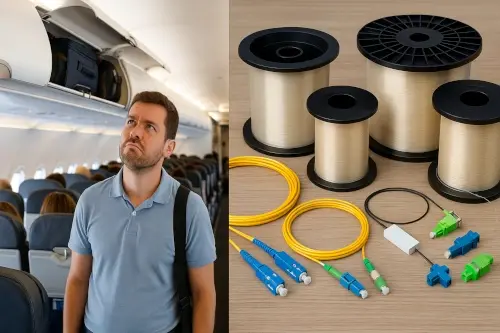
Knowing how to quickly identify different fiber optic connectors helps you match the right connector to your equipment, avoid connectivity issues, and minimize optical signal loss. Over the years, the industry has developed many connector types, each differing in shape, size, and performance to address a wide range of communications applications and needs. This brief introduction covers the most common types in use today (LC, SC, FC, ST, and MPO) for Telecom/ISP, Data Center, and other high-speed communications applications, along with the connector end-face polish options that are essential for proper connector mating. Each section includes example images so you can learn to easily identify these connectors on sight.

Note about Connector Reference Images below: This article includes a few visual examples to help you identify each connector type, but it is not intended to be a comprehensive visual reference guide that includes an image of every possible connector, boot, and cable color combination available in the industry based on the different fiber types and manufacturer styles. (Ex: A multimode connector may show the OM1 example, but not the OM3~OM5 examples)
Read More

Topics: fiber optic testing, optical fiber, network simulation, fiber optics

Understanding G.657 Bend-Insensitive Single-Mode Optical Fibers

Posted by Kevin Miller on Mon, Aug 31, 2026 @ 12:08 PM

Anyone who has pulled fiber through a crowded data center rack, routed a patch cord around a tight corner in a telecom closet, or fished a drop cable through a residential wall has likely experienced a physical limit: sharp fiber bends increase signal attenuation (loss) and degrade performance. Bend a fiber too far and light escapes the core, resulting in maximum loss and the signal never reaching the receiver at all. For decades, this constraint shaped how fiber networks were designed, often incorporating generous fiber bend radii into every cabinet, tray, and pathway to prevent excessive signal loss.

Read More

Topics: fiber optic testing, optical fiber, network simulation, fiber optics

What is Causing the Global Optical Fiber Shortage in 2026?

Posted by Kevin Miller on Tue, Jun 30, 2026 @ 11:06 AM

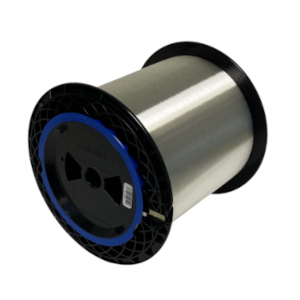
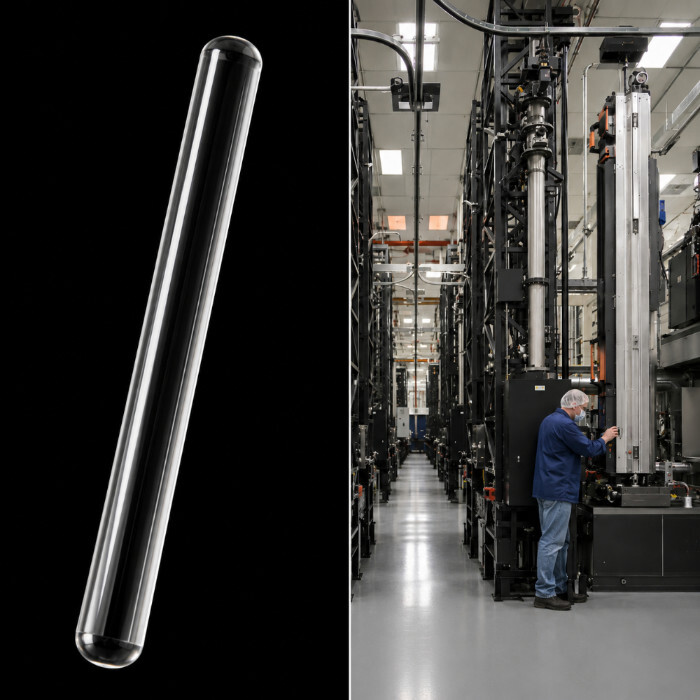
The fiber-optic communications industry is currently facing what many describe as one of the most severe shortages of optical fiber ever experienced, with capacity constraints now affecting nearly every user. Many types of single-mode and multimode fibers and cables now carry very long lead times, and some are not available to the broader market in the near term at all. Unlike past shortages, which were often limited to one or a few specific, common fiber types, this 2026 shortage includes a much broader range of fibers, both standard and specialty. The cause is not a single disruption or issue at a major global manufacturer, but rather a “perfect storm” of several demand drivers converging simultaneously. Simply put, massive and rapidly growing global demand for optical fiber is outpacing the existing physical production capacities of even the world’s largest manufacturers.

Read More

Topics: fiber optic testing, optical fiber, network simulation, fiber optics

Why Fiber Network Simulation Testing is an Essential Step for All Telecom/ISP Equipment Qualification

Posted by Kevin Miller on Thu, Apr 30, 2026 @ 12:04 PM

When a Telecom or ISP network operator deploys new network equipment, whether it’s a new line card, a transceiver module, an optical
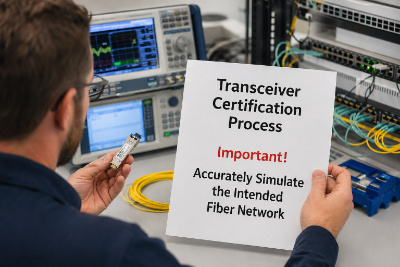
amplifier, or an entirely new system, the expectation is straightforward: the equipment should perform as specified once it’s connected to the live network. In practice, however, that expectation does not always come to fruition. Non-optimal performance results, unexpected signal degradation, device timing issues, and even poor compatibility issues surface post-deployment with enough frequency that mitigating these potential issues demands serious attention during the planning, evaluation, and testing phases, not after the fact.


Read More

Topics: fiber optic testing, optical fiber, network simulation, fiber optics

What is a Tethered Fiber Optic Drone?

Posted by Kevin Miller on Mon, Dec 22, 2025 @ 10:12 AM


As unmanned aerial systems continue to evolve, one category is attracting increasing attention, particularly in defense and surveillance circles: the tethered fiber optic drone. While most people are familiar with wireless drones that rely on radio frequency links for control and data, tethered fiber optic drones take a fundamentally different approach by replacing wireless RF communications with a physical optical fiber connection.

Read More

Topics: fiber optics, fiber tether, fiber optic drone, drone fiber spool canisters

Fiber Spools Are a Travel Hassle - Why Trainers Prefer Fiber Lab MSP

Posted by Kevin Miller on Mon, Sep 8, 2025 @ 10:09 AM

For many fiber optic training instructors, frequent travel is a necessity for conducting classes at different sites, including universities, learning centers, and client facilities. To teach students to effectively use test devices like OTDRs and optical power meters, spools of optical fiber are required for replicating real-world fiber spans. However, this requires instructors to transport and manage multiple reels of optical fiber, along with other essential components. While this fiber is crucial for demonstrating concepts and hands-on testing, traveling with these spools can be a major source of frustration for instructors.

Read More

Topics: optical fiber, fiber optic training, otdr training, fiber network simulators

Bare Optical Fibers: 2 Things You Must Know Before Buying

Posted by Kevin Miller on Tue, Jul 22, 2025 @ 13:07 PM

For most people working in the fiber optic communications field, their experience with optical fiber involves using jacketed fiber optic cables. This includes network and data center infrastructure cabling, which may contain hundreds of fibers in each cable, as well as patch cables with fewer fibers used for connecting devices. Due to the multi-fiber nature of jacketed cables and network devices such as optical transceivers, which require a Tx/Rx fiber pair cabling connection, it's commonplace for many people to think of spooled bare optical fibers for network simulation testing and optical delay applications in a similar format. Additionally, since the fiber manufacturers provide maximum signal attenuation/loss specifications for a fiber, there is sometimes a misconception that the resulting performance will always be within that defined specification when using spooled and terminated bare optical fibers. 

Read More

Topics: network simulation, optical time delays, bare optical fiber, optical fiber attenuation, optical fiber tension

Optimize RF-over-Fiber Testing: Eliminating Chromatic Dispersion

Posted by Kevin Miller on Thu, Feb 13, 2025 @ 13:02 PM

In this article, we discuss the role that Chromatic Dispersion (CD) plays when simulating the optical and latency performance of fiber spans during RF-over-Fiber (RFoF) testing procedures, along with introducing valuable strategies for effectively mitigating its detrimental impacts. 

Read More

Topics: fiber optic testing, dispersion compensating fiber, RFoF, optical time delays, RF-over-Fiber

Dispersion Compensating Fiber (DCF) for Mitigating CD Effects

Posted by Kevin Miller on Thu, Nov 14, 2024 @ 12:11 PM

When leveraging fiber optic technology for high-speed data communications, maintaining optical signal integrity during transmission over long distances is essential for ensuring maximum performance. A primary technical characteristic that arises during fiber-based signal transmission is Chromatic Dispersion (CD), a phenomenon that can severely degrade signal quality. In this article, we’ll explore CD including its detrimental effects on signal transmission, along with introducing Dispersion Compensating Fiber (DCF), a special type of optical fiber designed to mitigate CD effects and successfully overcome this challenge.

Read More

Topics: dispersion compensating fiber, dcf, chromatic dispersion, dc fiber

Beyond 1Tb/s - Thin Film Lithium Niobate (TFLN) Technology

Posted by Kevin Miller on Fri, Oct 11, 2024 @ 15:10 PM

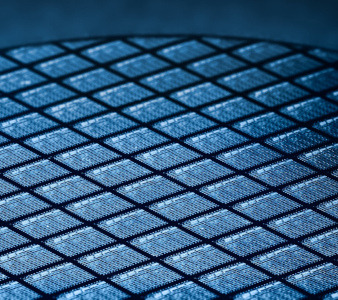
In today's digitally driven world, the demand for high-bandwidth data transmission is skyrocketing. The exponential growth of artificial intelligence (AI), machine learning (ML), quantum computing, LiDAR, and cloud-based applications is continuously pushing the boundaries of current data transmission technologies. Optical transceivers in today's market are delivering data rates of 800Gb/s and 1.6Tb/s utilizing existing photonic materials, but potential complexities and constraints are being identified giving rise to new technology approaches. Enter Thin Film Lithium Niobate (TFLN) -a promising solution poised to drive high data transmission rates with the added benefit of reducing power consumption.

Read More

Topics: thin film lithium niobate, 1.6Tb/s optical transceivers, TFLN, Silicon Photonics, Lightium